


How to Choose Flowers for a Vase: A Practical Guide
Last Updated: November 17, 2026
Quick Summary
To choose flowers for a vase, start with the vessel, since its height, opening and shape set the limits for the arrangement. Match stem length to vase height, pair bloom size and texture with the vessel, and check that the arrangement is balanced and stable.
- Measure the vase height and opening width before you buy or choose blooms.
- For low bowls, cut stems so the flower heads sit just above the rim.
- Tall, narrow-necked vases suit long stems; wide, low bowls suit short blooms.
- Place the bouquet in the vase and nudge it; reduce top weight if it wobbles.
Table of Contents
- Start With the Vase: Shape, Height and Opening
- Step 1: Match Stem Length to Vase Height
- Step 2: Pair Bloom Size and Texture With the Vessel
- Step 3: Balance Weight, Stability and Opening Width
- Keeping Your Chosen Flowers Fresh Indoors
- Choose Your Flowers and Vase With Daniel Ost
- Frequently Asked Questions
Start With the Vase: Shape, Height and Opening
Choosing flowers for a vase is easier when you begin with the vessel rather than the blooms, because the vase sets the limits for everything you put in it.
Look at three things first. Height controls how tall the stems can stand. The opening controls how many stems fit and how they spread. Shape controls the overall silhouette.
A transparent glass vase is a versatile choice. Our Vase has a clean, understated form that lets the flowers stay the focal point.
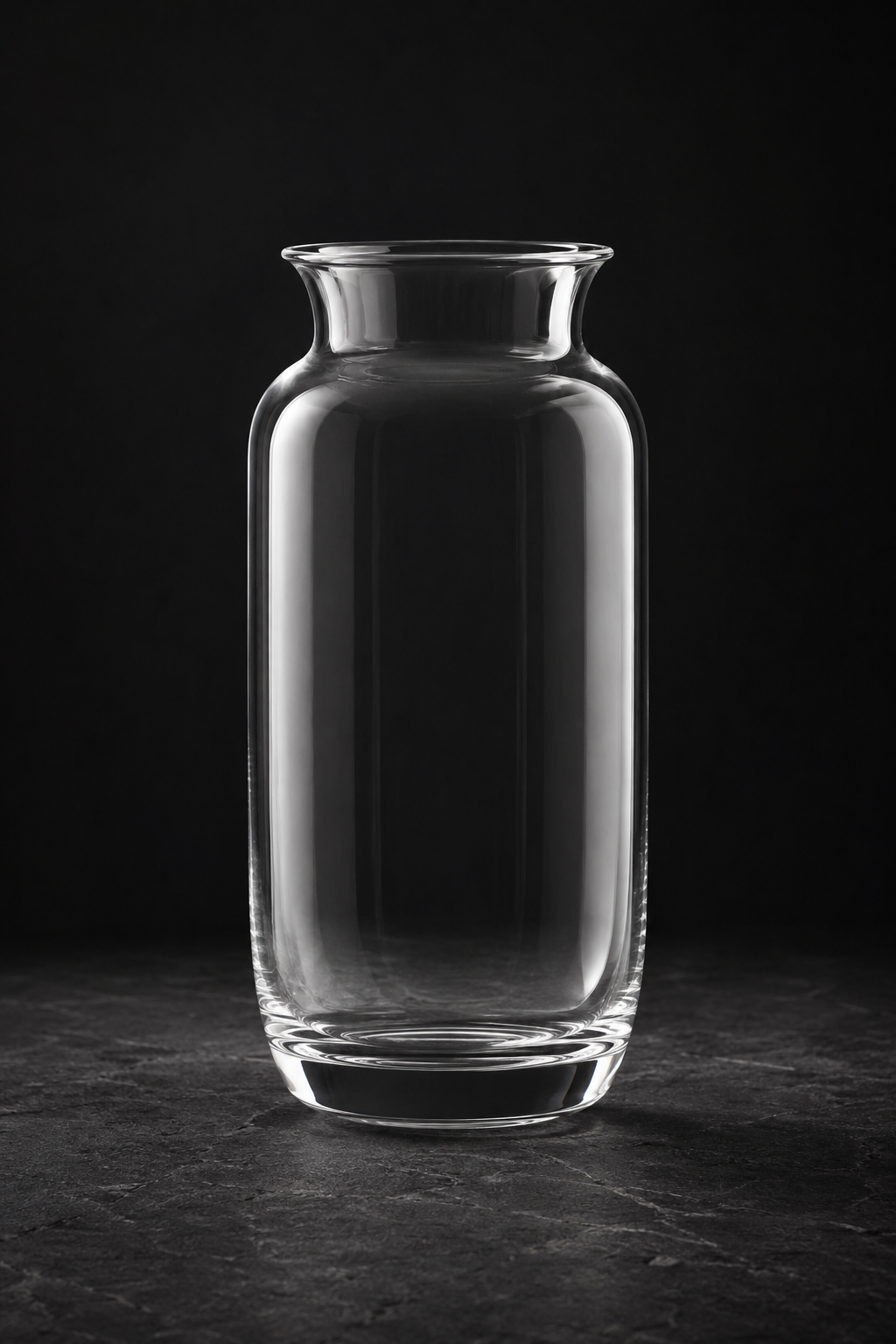
Quick checks before you buy:
- Measure the vase height and the opening width
- Decide whether you want the stems to rise above the vase or sit low
- Choose a shape that matches the bouquet style: hand-tied, structured or loose
Step 1: Match Stem Length to Vase Height
The stem length should relate to the vase height in a simple way. For a low bowl, the flower heads should sit just above the rim.
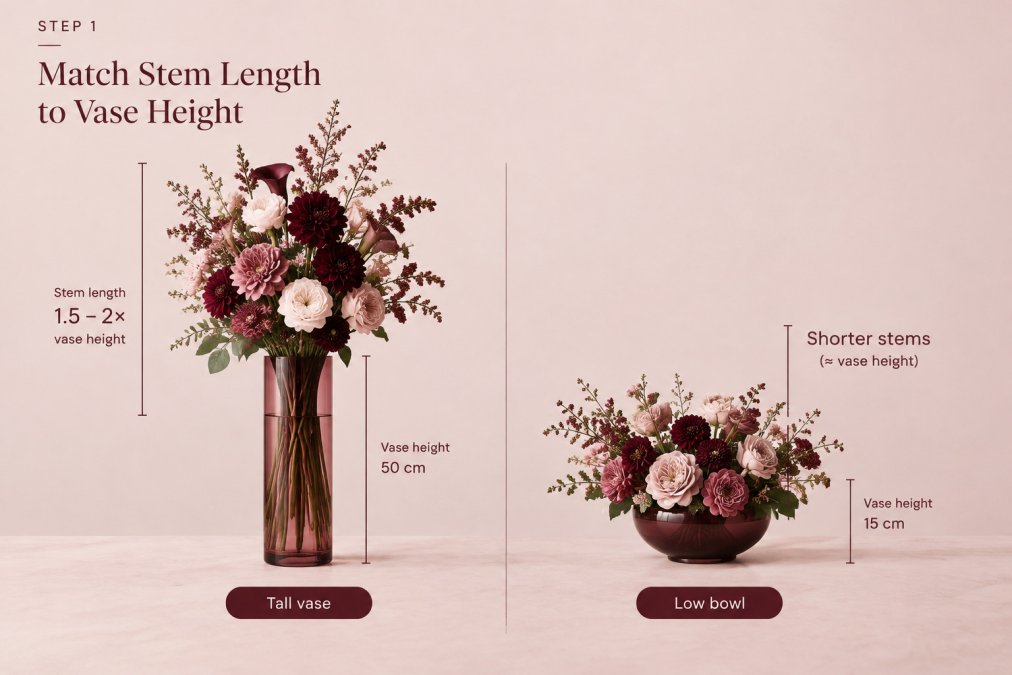
Vase Height for Long-Stemmed Flowers
When you choose flowers for a vase with long stems, pick a tall vase with a narrow neck so they stay upright. Trim stems at an angle under running water, then place them in the vase and check the balance from the side. If the top feels heavy, shorten a few stems rather than forcing a taller vase to hold them.
Vase Height for Short Blooms and Low Bowls
Short blooms work best in wide, low containers. Cut the stems so the flowers sit just above the edge. This keeps the arrangement close to eye level, which suits a dining table, where guests need to see across the room comfortably.
Step 2: Pair Bloom Size and Texture With the Vessel
Bloom size and texture matter as much as height, but the most useful way to apply that is flower by flower.
A quick flower-to-vase reference:
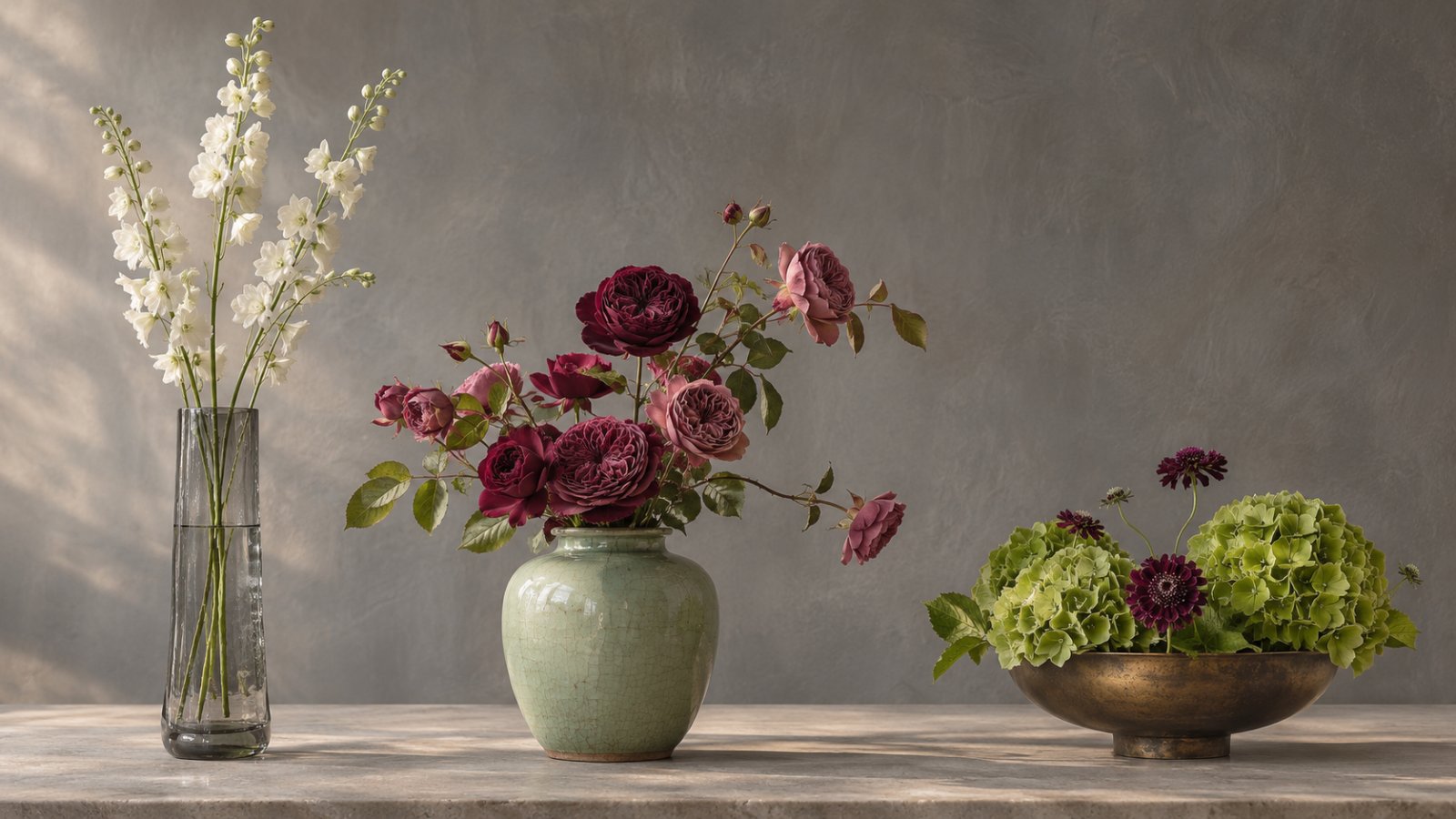
- Tulips: a straight-sided glass vase with a medium opening. Tulips continue to grow and bend in the vase, so a narrow neck keeps a small group upright while still letting the stems curve. A tall cylinder suits a bunch of ten or more; a short, wide glass suits five to seven.
- Roses: a vase roughly half to two-thirds the height of the stems, with a neck just wide enough to hold them. A rounded belly gives a classic garden-rose silhouette; a straight column suits long-stemmed roses with tight buds.
- Lilies: a tall, heavy-based vase, because the stems are long and the open flowers are top-heavy. Choose an opening wide enough for the thick stems to sit without crushing, and expect the arrangement to widen as buds open.
- Sunflowers: a wide, weighty vase with a broad base. The heads are large and the stems coarse, so a narrow neck will tip. A short, sturdy ceramic or a wide glass cylinder works well.
- Hydrangeas: a wide, stable vase with a generous water reservoir, since the heads drink heavily. A rounded bowl lets the domed head sit naturally above the rim.
- Delicate, airy stems such as sweet peas, waxflower or spray roses: a lighter, more open vessel, a narrow glass or a small ceramic bud vase, so the movement of the stems stays visible rather than being packed tight.
Texture changes how a vase reads, too. Glossy, smooth petals look crisp against clear glass. Soft, matte textures look warmer in ceramic or in a more textured vessel.
Watch out: a vase that is right for the flower type can still be wrong for the stem count.
The article gives a quick reference for matching common flowers to vase types:
Flower |
Best vase |
Key point |
|---|---|---|
Tulips |
Straight-sided glass, medium opening |
Narrow neck keeps small groups upright |
Roses |
Height half to two-thirds of stems |
Neck just wide enough to hold them |
Lilies |
Tall, heavy-based vase |
Top-heavy; arrangement widens as buds open |
Sunflowers |
Wide, weighty vase with broad base |
Narrow neck will tip |
Hydrangeas |
Wide, stable vase with large reservoir |
Heads drink heavily |
Sweet peas, waxflower |
Narrow glass or small ceramic bud vase |
Keeps stem movement visible |
Magnolia, eucalyptus |
Tall, narrow-necked vase |
Holds stems upright, branches fan above rim |
Step 3: Balance Weight, Stability and Opening Width
Balance is the difference between an arrangement that looks settled and one that looks like it might fall.
The opening width sets the spread of the bouquet. A narrow opening holds a tight, structured group. A wider opening allows loose, natural stems to fan out.
A simple test: place the bouquet in the vase, then gently nudge the vase on the table.
Keeping Your Chosen Flowers Fresh Indoors
Vase choice and flower care are the same decision.
Prepare the stems before arranging:
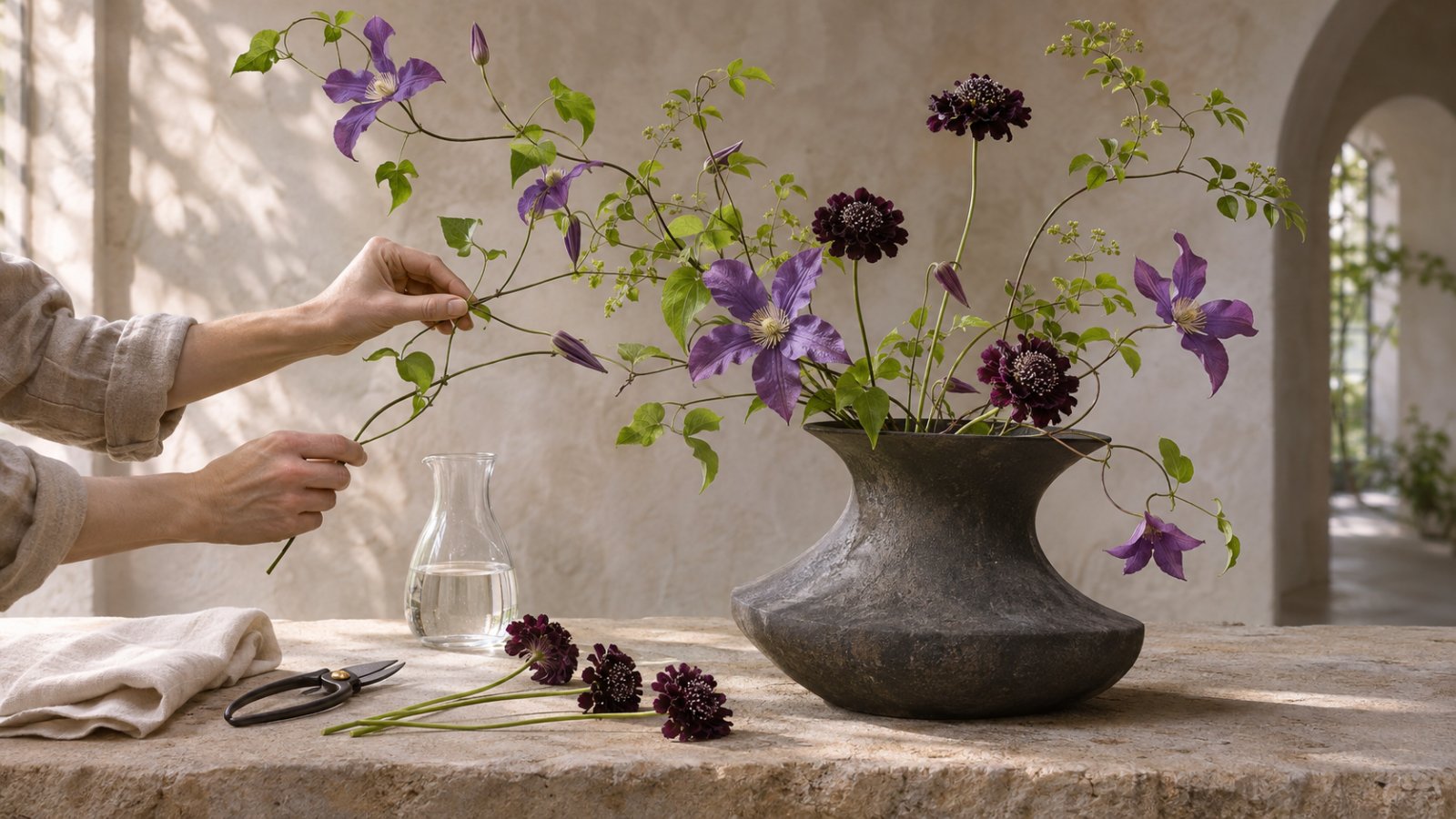
- Trim each stem at a slant with a sharp knife or snips, removing two to three centimetres. A slanted cut gives the stem a larger surface to drink through and stops it sitting flat on the base of the vase.
- Cut stems under running water where you can, so air does not draw up into the stem.
- Strip any leaves that would sit below the waterline. Submerged foliage rots quickly and clouds the water.
- Remove thorns from roses if they will rub against neighbouring stems, and take off any damaged or bruised petals.
Keep the arrangement going:
- Change the water every two days, or daily in warm weather. Recut the stems at a slant each time you change the water.
- Rinse the vase at every refill rather than simply topping it up.
- Keep the vase away from direct sun, radiators, draughts and ripening fruit, which releases ethylene and speeds fading.
- Remove wilting blooms promptly so they do not affect the rest of the arrangement.
- For flowers that arrive in water or with a sachet, follow the care advice given with the flowers.
Match the care to the vessel:
- Clear glass shows the water, so you will notice cloudiness early, an advantage for anyone who wants to stay on top of freshness.
- Ceramic and opaque vases hide the water, so set a reminder to change it on a fixed schedule rather than waiting to see it.
- Narrow-necked vases need a bottle brush to clean properly; wide-mouthed vases are easier to scrub but evaporate faster, so check the level more often.
- Very tall vases hold a large volume of water, which stays cooler and cleaner for longer, but they are harder to empty and rinse, plan for a full refresh rather than a top-up.
This advice applies to cut bouquets and arrangements. Living plants, such as orchids, need different care and should not be treated as cut flowers; follow the guidance supplied with the plant.
Watch out: adding flower food to old water does not rescue a dirty vase. Clean the vase first, then mix fresh food into fresh water.
Choose Your Flowers and Vase With Daniel Ost
Choosing the right flowers and vase together gives you a result that suits the space and the occasion. If you want a ready-made starting point, our Love Collection offers romantic bouquets for anniversaries and heartfelt gestures, and our Radiant Bloom makes a bold statement for birthdays and celebrations.
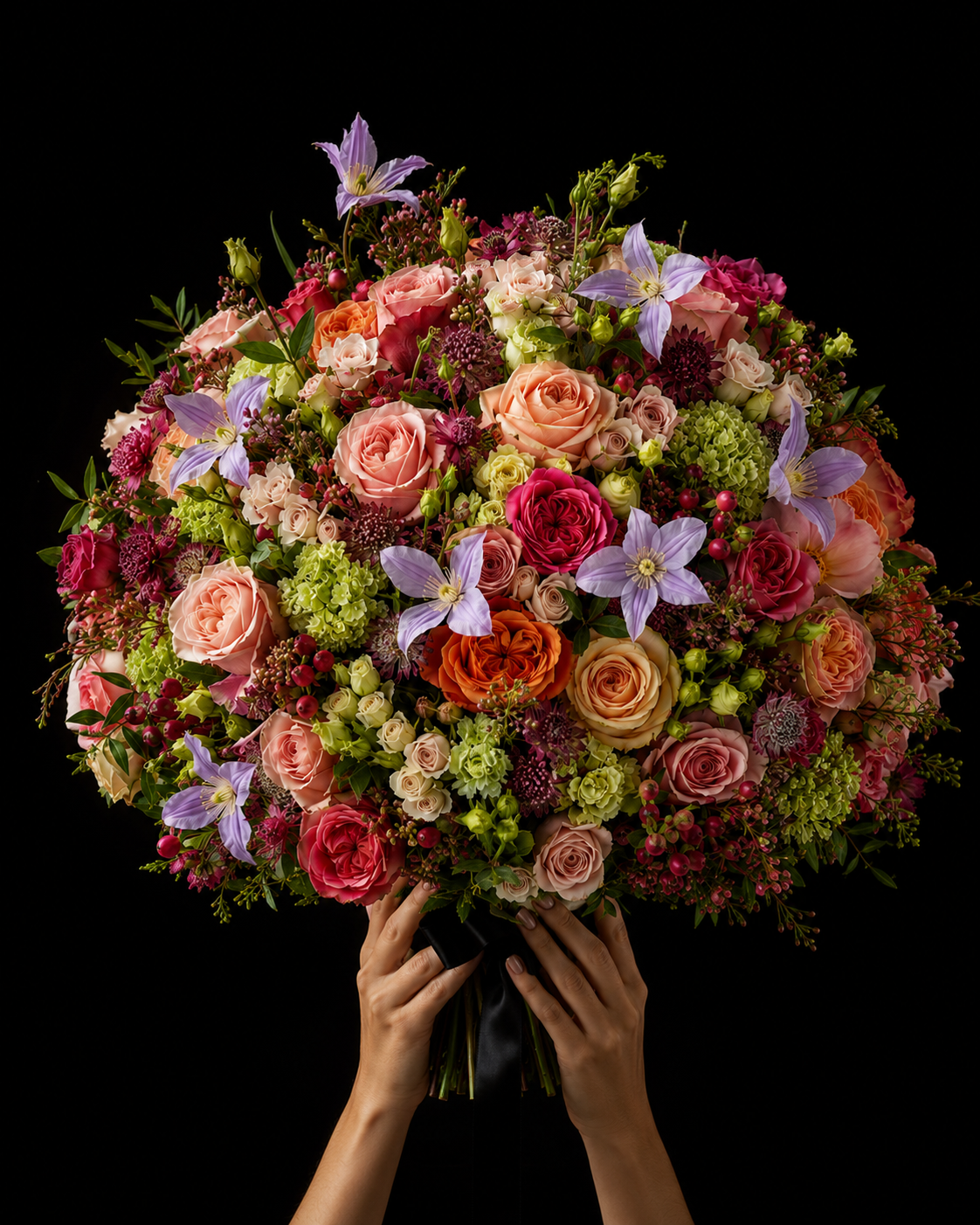
Order your flowers alongside a vase for a display-ready gift, or contact us for guidance on the right arrangement for your home or event.
Frequently Asked Questions
How do you match flower height to vase size?
A useful starting point is to make the flowers roughly one and a half to two times the height of the vase for a tall arrangement, and to keep blooms close to the rim for a low bowl. Measure from the base of the vase to the top of the tallest flower. If the stems are much taller than the vase, the arrangement can look top-heavy. If they are much shorter, the flowers can look lost. Trim stems on an angle, check the result from the side, and adjust before you add more flowers.
What are the best flowers for a narrow-neck vase?
Narrow-neck vases suit flowers with a slim, upright habit that can be gathered into a neat stem group. Tulips, delphinium, snapdragons and single-stemmed roses work well because they do not need much room to open. Avoid wide, full-headed flowers such as peonies in a narrow opening, as they will crowd and bruise. A small number of stems placed carefully often looks more composed than a crowded bunch forced into the neck.
Should the vase be wider than the bouquet?
The vase opening should generally be slightly narrower than the widest part of the bouquet, so the flowers rest on the rim and hold their shape. If the opening is much wider, the stems can slip and the arrangement may collapse. For wide, loosely arranged bouquets, a vase with a wider mouth and a stable base works best. Test the fit by setting the flowers in the vase dry before adding water.
How do you keep flowers fresh indoors once arranged?
Use clean water and a clean vase, recut stems at a slight angle, and remove any leaves that would sit below the waterline, as they rot quickly. Change the water every two days and recut the stems each time. Keep the arrangement away from direct sunlight, heating vents and ripening fruit, which release ethylene gas that shortens vase life. Replace wilted blooms promptly so they do not affect the rest of the arrangement.
